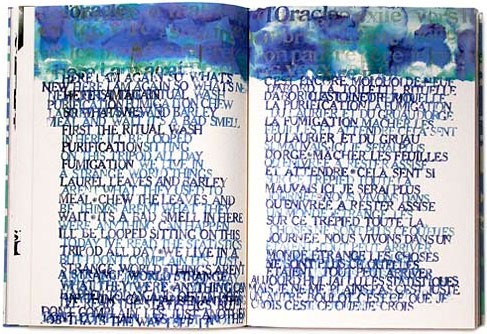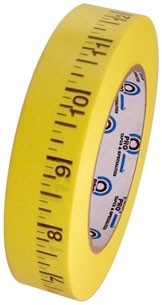
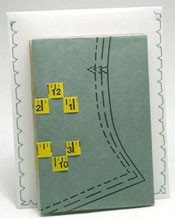
 When I was designing To a Friend Going Blind, I wanted to use a sewing measuring tape for the binding. A conventional measuring tape, bought from a sewing supply store, was too thick and too expensive for an edition of 50. Then somewhere I found rolls of tape that looked like a measuring tape. (As a binding it was strong, but a pain to prepare — I had to unroll the tape and apply it to tissue paper first as it had adhesive on the back, then cut the blank top off by hand.) When I packed up my studio in December, I found 1/2 a roll, and carted it here to Santa Fe, although I’m not sure why.
 When I found that 1/2 roll, I had already packed up my copy of the finished book, so I couldn’t go back and look at it. And of course I quickly forgot that I wanted to look at it again… until the other day when I read an article in Salon called “The craft that consumed me” where the author mentions making duct tape wallets and says “Check out TapeBrothers.com, which features an extraordinary selection, even my most-loathed pattern of all time after perhaps animal print anything: camouflage.” So I did. The measuring tape tape is filed under “Artist Tapes.” Seems like a good resource to know about. Then I went off and found my copy of To a Friend Going Blind and re-read the poem with a cup of tea.