 Over the past year I’ve noticed that students in my letterpress classes invariably show up with the same small pocket-sized black notebooks. Some have been elaborately decorated on the covers. “Moleskine makes them,” one of my students told me. I noticed lots of people on Etsy selling them with artwork on the covers — usually Gocco printed. Moleskine encourages people to share the artwork in and on their products — the website has a section on an art show of work using Moleskines.
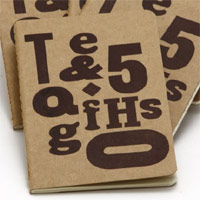
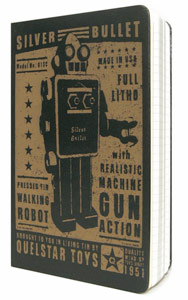
 I bought one and they are really handy. Well made, they fit in my purse, have 64 pages (with the last 16 sheets perforated and detachable!) and the inside of the back cover has a bonus pocket for notes or clippings. I also tried printing a wood type collage on the cover (see photo above — I have them for sale on my website here.
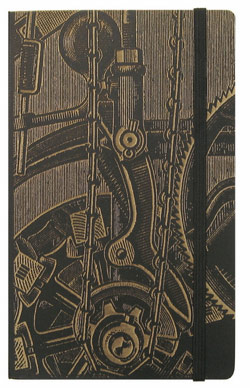
But some of the best covers have been laser engraved (probably using the same sort of machine I used to cut out my recent pop-up book — the laser cutter can also engrave on glass and acrylic and thick paper). Below are two covers done by Modofly. They are bigger than the small pocket ones I’ve got. For more covers, see this flicker pool or this Etsy search.
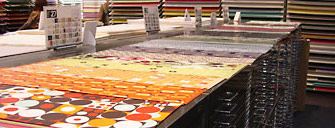 One of my favorite afternoon activities is shopping for paper. San Francisco has a wealth of shops to choose from:
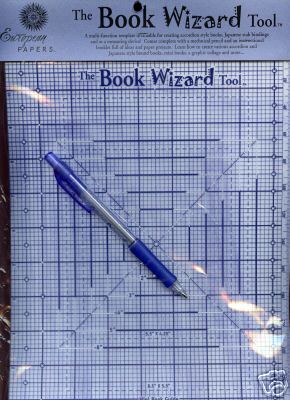
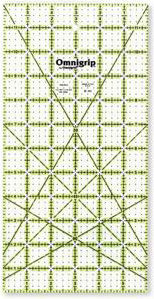 I make a lot of models — all cut by hand — before I commit to making an edition of anything. One of the tools I couldn’t do without is my plastic quilting ruler. It’s 6″ wide, 12″ long, and lets me cut 2 edges at once. Since it’s clear plastic, I can see through to what I’m cutting underneath. That and the printed grid are really helpful when trying to center something on a page. The only drawback is that over time I’ve dug into the plastic with my X-acto knife, and the edge of the ruler isn’t as crisp as a metal ruler of the same age might be. Quilting rulers come in all sorts of sizes: 4″x 8″, 6″x 6″… I have another one that is 6″x 24″ — it can be a bit unwieldy but it comes in so handy when I need to quickly cut up a large parent sheet of paper.